
Three weeks ago, one of our does had her second freshening and gave birth to a very large baby boy. It was a stressful delivery because a lot of fluid came out first and she was pushing for a long time. The umbilical cord was stuck in the baby’s mouth and had to be loosened and pushed aside so Mom could deliver. Otherwise, she seemed fine, and her baby boy was born healthy.
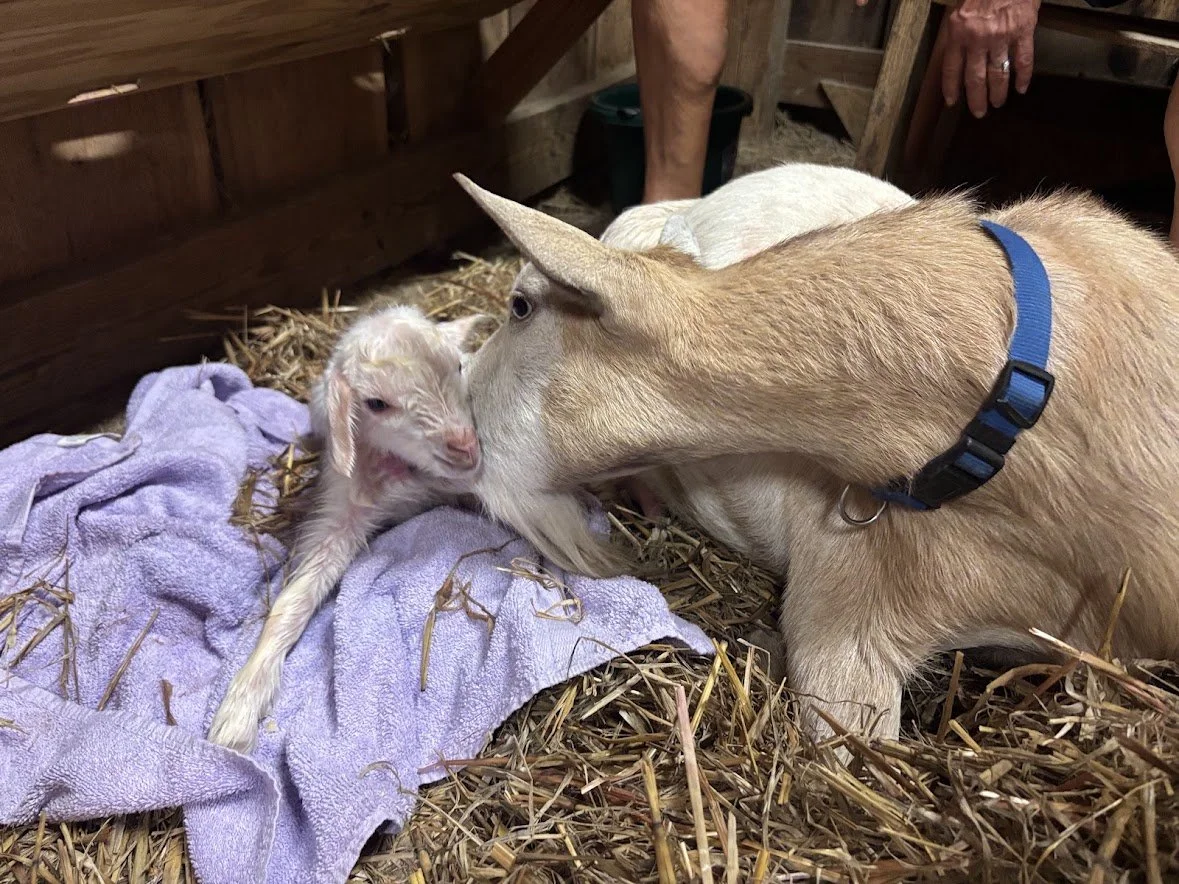
Unfortunately, she did not bounce back like our does usually do. We were certain she had not retained some of the placenta because her temperature was normal and she was eating. We continued to monitor her, hoping she would regain her usual energy, but she didn’t.
The Symptoms We Noticed
Over the following weeks, we noticed several changes in her behavior and mobility:
Lethargy: She was noticeably less energetic than usual.
Difficulty jumping: She could no longer jump onto any platform, including the milking stand.
Physical discomfort: She was vocally distressed when we lifted her onto the milking stand and when she had to get down.
Lack of interest in grazing: She would head out to pasture with the other goats but return on her own almost immediately.
Weakness in her hind legs: Her back legs seemed to be getting progressively weaker.
Loss of Appetite: She was eating some hay, but not interested in grain or her other supplements.
At first, we thought she was simply taking longer to recover from a difficult delivery. We’ve had that happen in the past. But as the days passed, it became increasingly clear that this was more than ordinary postpartum fatigue.
Today, we took her temperature again. It was a bit low, and she was really struggling to walk. That was enough for us to stop waiting and get her to Dr. Dan.
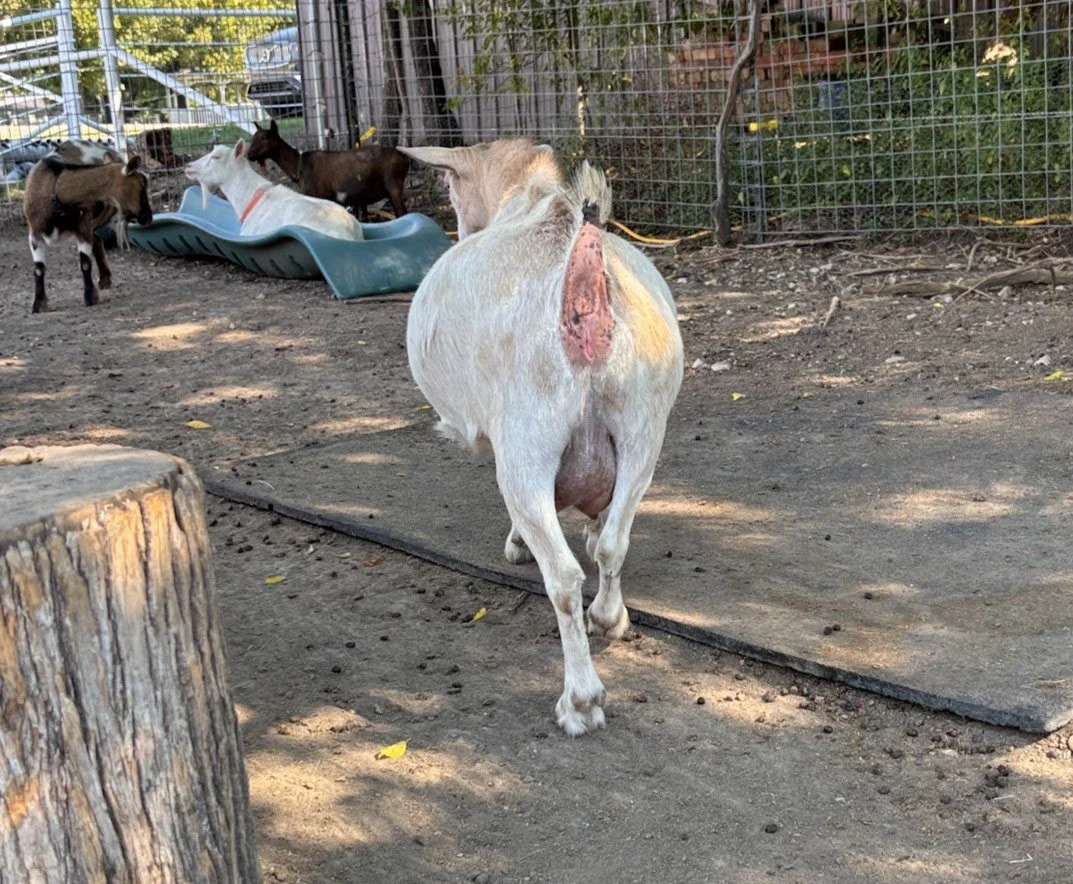
The Diagnosis: Calcium Deficiency
Dr. Dan diagnosed our doe with calcium deficiency, also known as hypocalcemia.
Calcium is essential for normal muscle contraction, nerve function, and movement. During late pregnancy, a doe needs additional calcium to support the development of her kids' skeletons. After kidding, her body continues to require substantial amounts of calcium to produce colostrum and milk.
If her body cannot absorb or mobilize enough calcium to meet these demands, the calcium level in her blood can drop. This can interfere with normal muscle and nerve function, resulting in weakness, lethargy, reduced appetite, and difficulty walking. In severe cases, a goat may become unable to stand.
Although milk fever is often associated with dairy cows, goats can develop hypocalcemia, too. It is particularly important to consider in does with high milk production or significant nutritional demands around kidding (Abby!)
Our doe was three weeks postpartum, and her progressive weakness and low temperature were concerning signs. Thankfully, we got her to the veterinarian before her condition deteriorated further.
Treatment: Calcium, an Anti-Inflammatory, and Preventive Antibiotics
Dr. Dan treated our doe's calcium deficiency by administering calcium intraperitoneally (directly into the abdomen) through her side. He also gave her an anti-inflammatory medication and prescribed a 48-hour course of antibiotics as a precaution.
The calcium was intended to correct her deficiency, while the anti-inflammatory medication was used to help address inflammation or discomfort in the back legs. The antibiotics were given preventively rather than to treat a confirmed infection. (He also prescribed milk of magnesium twice a day in case he missed an ulcer, which he didn’t think it was.)
We were relieved to finally have an answer. Our doe's initially normal temperature and continued appetite had given us some reassurance, but her worsening mobility was a warning we could no longer ignore.
Calcium deficiency is treatable, but the correct diagnosis and appropriate treatment are essential.
Why Do Postpartum Does Develop Calcium Deficiency?
A doe's nutritional requirements change dramatically during pregnancy and lactation. Calcium is necessary for fetal bone development, muscle function, and milk production.
Several factors can increase the risk of hypocalcemia:
High milk production: Producing milk places a significant demand on the doe's calcium supply.
Inadequate dietary calcium: Her feed may not provide enough calcium to meet her changing needs.
Mineral imbalances: The balance of calcium, phosphorus, and other minerals can affect calcium metabolism.
Pregnancy demands: Carrying large or multiple kids can increase nutritional requirements during late gestation.
In our doe's case, she had delivered a particularly large kid and was several weeks into lactation. Although we cannot determine exactly why she developed the deficiency from these details alone, her timing made postpartum hypocalcemia an important condition to recognize.
Recognizing the Warning Signs
One of the most important lessons from this experience is that you do not have to wait for a goat to stop eating completely or become unable to stand before taking action.
Possible warning signs of hypocalcemia include:
Lethargy or unusual quietness
Reduced appetite
Muscle weakness or tremors
Difficulty walking or rising
Reduced interest in pasture
Low body temperature in more advanced cases
These symptoms are not exclusive to calcium deficiency. Other metabolic disorders, postpartum infections, injuries, and additional illnesses can cause similar problems. Some conditions can also occur at the same time.
If your goat is becoming progressively weaker, contact your veterinarian promptly. If she cannot stand, becomes unresponsive, or deteriorates rapidly, treat it as an emergency.
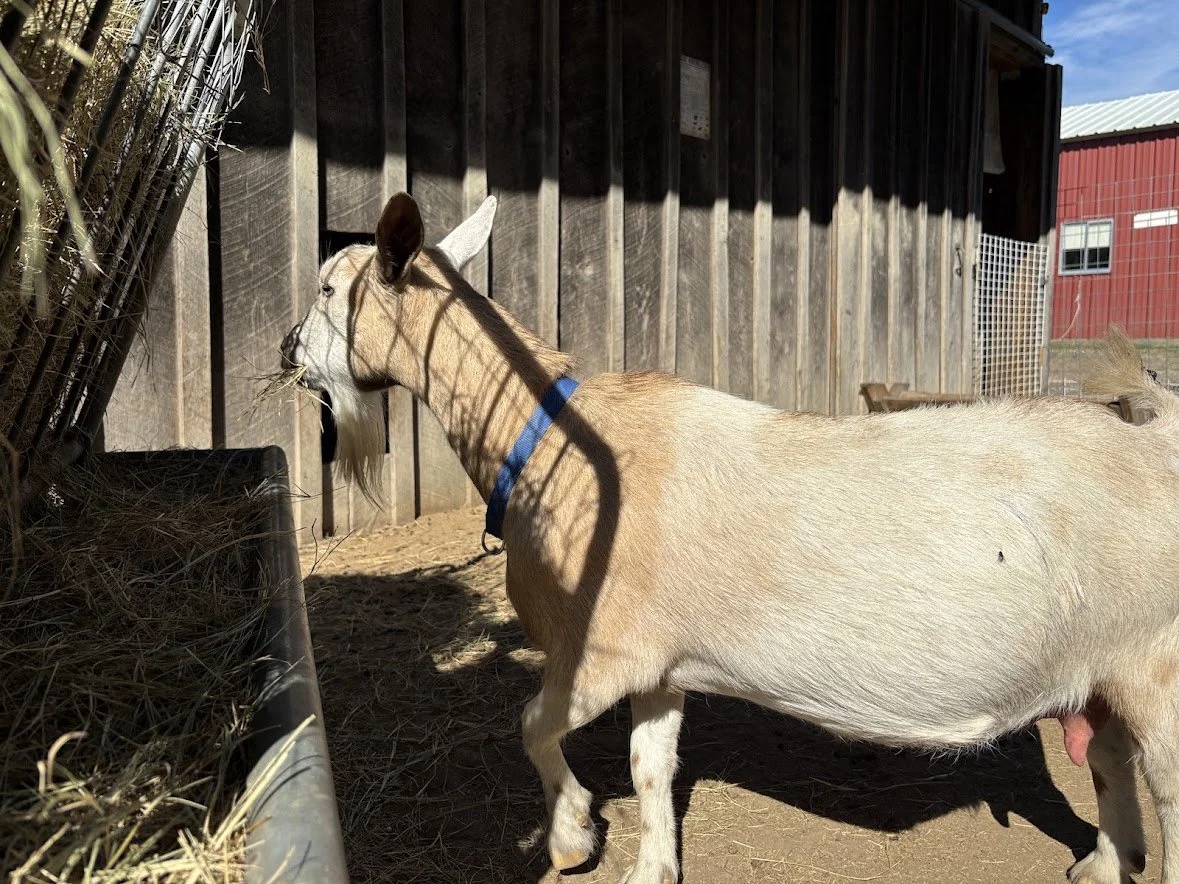
Preventing Calcium Deficiency in Your Goat Herd
Prevention begins well before kidding. By the time a doe shows obvious signs of hypocalcemia, her calcium level may already be dangerously low.
Here are some important steps goat owners can take to reduce the risk.
1. Review the Diet of Pregnant and Lactating Does
Make sure your goats receive adequate calcium and other essential minerals through a balanced feeding program. Forage quality matters, and some grass hays and pastures contain relatively little calcium.
2. Pay Special Attention to the Transition Into Lactation
The weeks surrounding kidding place substantial demands on a doe's body. Monitor her appetite, energy, milk production, and mobility closely, especially if she is producing a lot of milk.
3. Avoid Sudden Dietary Changes
Keep feeding practices consistent and make necessary changes gradually. Nutritional management should account for the doe's stage of pregnancy, expected milk production, body condition, and overall health.
4. Know What Is Normal for Your Goats
Because we see our animals every day, we are often the first to notice when something is wrong.
A doe who stops jumping onto the milking stand, leaves the pasture early, or walks differently is telling us something important. Changes in normal behavior deserve attention, especially after kidding.
5. Have a Veterinary Plan Before an Emergency Happens
Know which veterinarian you will call and how to reach them after hours. Keep accurate records of kidding dates, health problems, treatments, and changes in behavior.
And remember: more calcium is not automatically better. Excess supplementation and mineral imbalances can create other problems, so work with your veterinarian to develop a feeding plan appropriate for your herd.
The take away
Raising goats is a constant learning experience.
We can provide good nutrition, clean housing, and attentive care and still encounter unexpected health problems.
Pay attention to the little changes.
If you raise dairy goats, keep hypocalcemia in mind when a doe develops weakness or difficulty walking around kidding.
We are blessed to be able to have eyes on our goats throughout the day, every day, and being so in tune to our animals has saved us countless times. Not everyone is so fortunate, so we hope that teaching though our experiences can help others get ahead of any issues even if they can’t have eyes on their animals all the time.
The most important thing – I often hear people boasting about how long they have been raising goats, as if time is a good indicator of expertise. Just because it never happened to you, doesn’t mean you’re doing things right - always be humble enough to recognize something new. Continue your education and forever be on the search for information and knowledge.
References
MSD Veterinary Manual. “Parturient Paresis in Sheep and Goats (Milk Fever, Hypocalcemia, Lambing Sickness).” Information on clinical signs, diagnosis, treatment, and prevention.
https://www.merckvetmanual.com/metabolic-disorders/parturient-paresis-in-ruminants/parturient-paresis-in-sheep-and-goatsMSD Veterinary Manual. “Nutritional Diseases of Goats.” Information about nutritional deficiencies and related metabolic conditions.
https://www.merckvetmanual.com/management-and-nutrition/nutrition-goats/nutritional-diseases-of-goatsMSD Veterinary Manual. “Nutritional Requirements of Goats.” Guidance on goat nutrition and mineral requirements.
https://www.merckvetmanual.com/management-and-nutrition/nutrition-goats/nutritional-requirements-of-goatsOhio State University Extension, OSU Small Ruminant Team. “Parturient Paresis in Sheep and Goats (Milk Fever, Hypocalcemia, Lambing Sickness).” Additional information about clinical signs and treatment.
https://u.osu.edu/sheep/2023/02/28/parturient-paresis-in-sheep-and-goats-milk-fever-hypocalcemia-lambing-sickness/Bayoumi, Y. H., et al. “Peri-parturient hypocalcemia in goats: Clinical, hematobiochemical profiles and ultrasonographic measurements of postpartum uterine involution.” Veterinary World (2021). Research on hypocalcemia and blood chemistry changes in goats around kidding.
https://pubmed.ncbi.nlm.nih.gov/33935398/
Disclaimer: This article shares our homesteading experience for educational purposes and is not a substitute for veterinary care. Always consult a qualified veterinarian for diagnosis and treatment of a sick goat.