
It is quite embarrassing to receive a call from a new goat friend who has adopted a batch of your goat kids, asking if it is possible that they have lice. This is exactly what happened to me this spring, and I responded confidently, “No—it is not possible! We have never had lice here!”
To which Kendra responded, “Are you sure? Because these look an awful lot like lice!” She sent me a video of the little suckers.
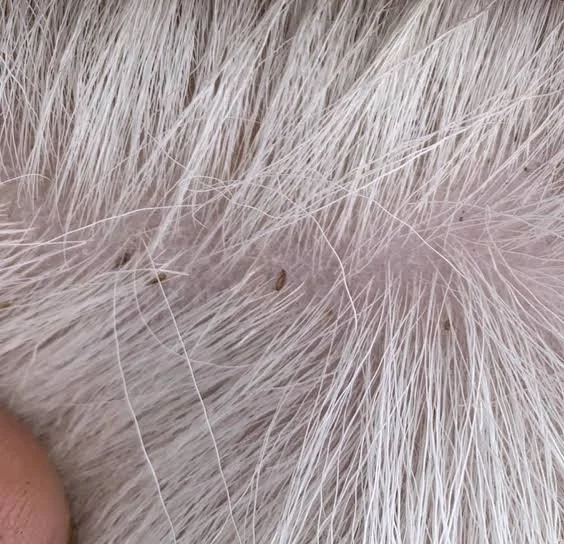
I grabbed a nit comb that I had on hand from when my daughter had lice and began investigating this possibility. You see, we had never dealt with lice in our herd, but it turned out we were infested and didn't even know it. (The same thing had happened in my household years before, so shame on me for not recognizing the signs!)
We always have goats in various stages of life on our ranch, so I went to work researching the best practices for safely eliminating lice from my bucks, wethers, doelings, pregnant does, and newborn babies.
The type of lice, the age and condition of the goat, pregnancy, lactation, and whether an animal is intended for milk or meat can all affect your treatment choices.
Here is what I learned, along with the resources I found most helpful at the bottom.
First, What Exactly Are Goat Lice?
Goat lice are tiny external parasites that live in the animal's hair and on its skin. They are relatively common, particularly during cooler months, and an infestation can go unnoticed until the population grows or the goats begin showing signs of irritation.
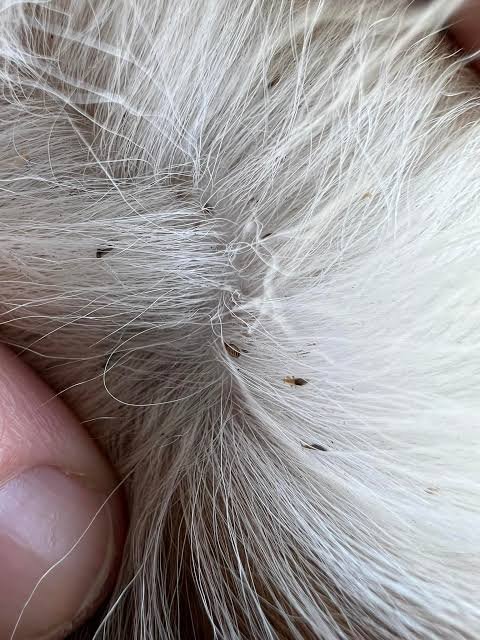
There are two main types of lice that affect goats:
1. Chewing or biting lice
These lice feed on skin debris, hair, and other material on the skin's surface. They cause irritation, itching, and damage to the coat.
2. Sucking lice
These lice pierce the skin and feed on blood and tissue fluids. Heavy infestations can cause anemia, weakness, weight loss, and other serious health problems.
Goat lice are also host-specific, meaning the lice that infest goats generally do not establish infestations on people. (Whew!) So, while discovering lice in your herd may be unpleasant, you do not need to worry that your goat's lice will become a human head-lice infestation.
How Do You Know If Your Goats Have Lice?
One of the most humbling lessons I learned is that having a clean barn, healthy animals, and a well-managed herd does not guarantee that you will never encounter lice.
Lice infestations may be easier to spot during colder months, when populations can increase. However, you can encounter them at other times of the year, too.
Here are some signs to watch for:
Excessive scratching, rubbing, or biting at the coat.
Hair loss, especially around irritated areas.
A dull, rough, or matted coat.
Small insects moving among the hairs.
Tiny eggs, commonly called nits, attached to hair shafts.
Skin irritation, sores, or scabs in more severe cases.
To inspect your goats, part the hair in several places and look closely at the skin and hair shafts. Pay particular attention to areas where you notice scratching or hair loss, including the neck, shoulders, back, and other areas appropriate to the suspected louse species. Look carefully and quickly, because they are fast and will move to hide.
A fine-toothed lice comb can help you find small insects, especially on young kids. However, a comb is an inspection tool, not necessarily a complete treatment for an entire herd.
If you are unsure whether you are seeing lice, mites, or another skin problem, take clear photographs or videos and consult a veterinarian.
The right approach depends on the product, its active ingredient, the type of lice, and the individual goat.
Below are the options I found (all applied topically*)
Safe For Under 3 months of age:
· Cyclence: 1cc/25lbs
· Eprinex Pour On: (for lice) 1cc/22lbs (generally only one treatment needed)
· Tea Tree Oil: 1 drop mixed with 6cc of a carrier oil (Sweet Almond Oil) Nit Comb a few hours later.
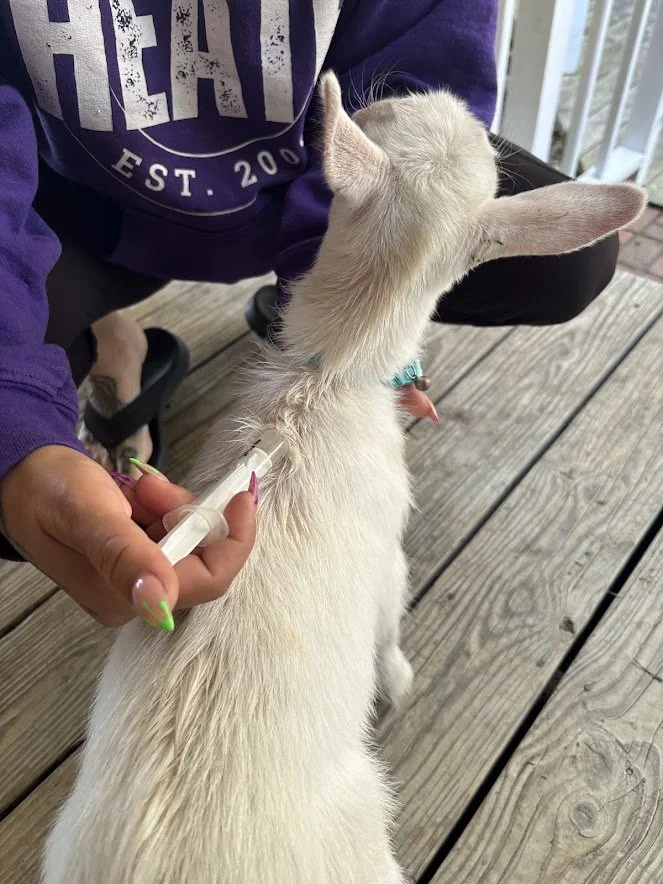
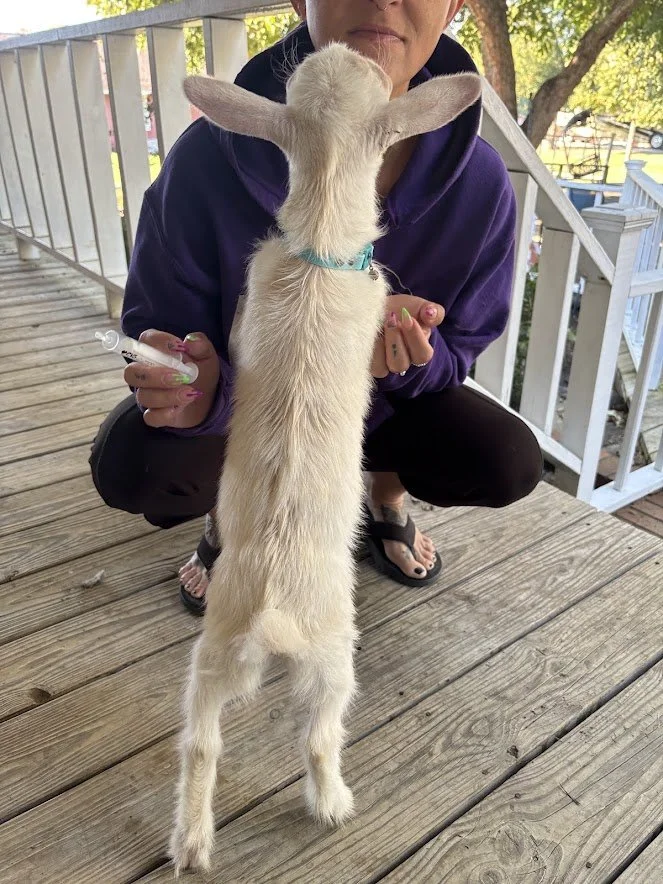
o You do not need to apply a full dose on a smaller goat. We use about 3cc on our young kids.
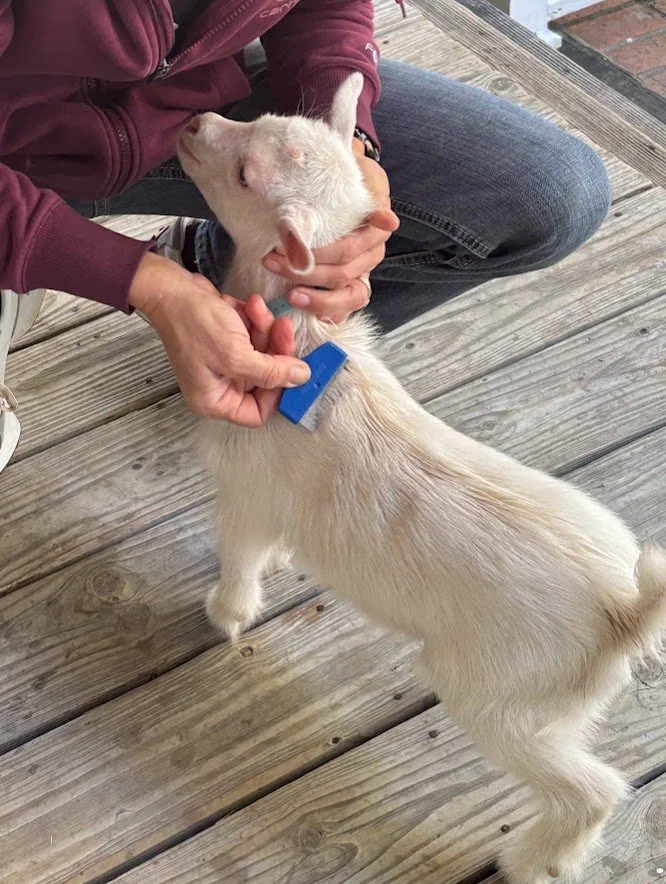
· Puppy or Kitten Flea Powder
NOT Recommended for under 3 months of age or pregnant or lactating does:
· Ivermectin Pour On: 1cc/33lbs
· Ultra Boss: 1.5cc/50lbs
*Topical medications should be applied from neck to tail, down their top line. Part hair and apply using a dosing syringe every inch along the spine. Keep out of goat’s eyes. If you notice any adverse reaction, wash goat with grease cutting dish soap immediately.
We use ivermectin on our boys, mostly because they have more hair, and we want something that will be strong and get down in there.
We use tea tree oil with sweet almond oil as specified above on all of our other goats (usually they are either pregnant, lactating or babies.) We use the full 6cc mixture on each of the adults and half the amount on the kids.
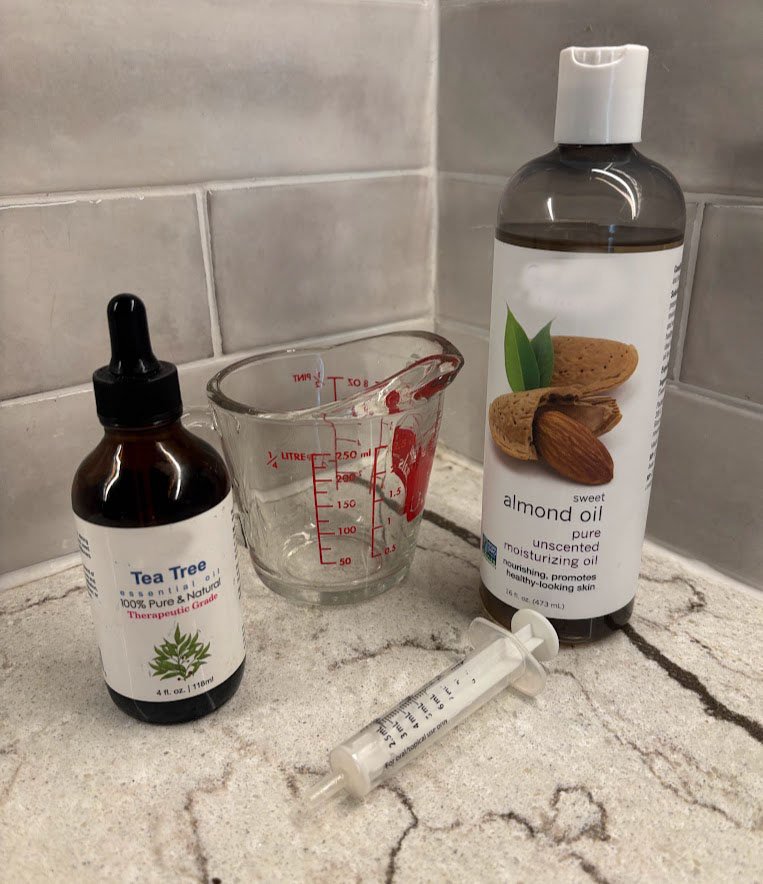
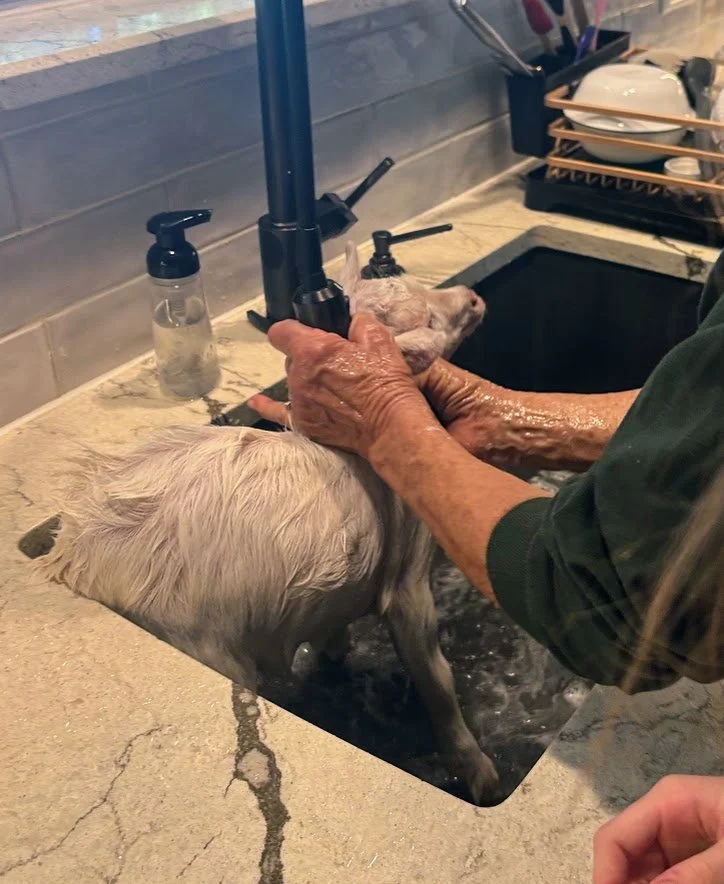
The biggest drawback to the tea tree oil and carrier oil treatment is that it makes their coats a greasy, dirty, mess. We apply the treatment, nit comb them a few hours later, and then give everyone a bath the following day. With 20-25 goats at any given time, it is manageable, but if we had a larger herd, I would probably opt for a different treatment option. The first time around we did the two treatments and THEN washed everyone – but for two weeks they were filthy, so we didn’t take that shortcut going forward.
Why Is a Second Treatment Necessary?
Most lice treatments kill live lice but do not reliably kill their eggs. Those eggs will hatch after the initial application, allowing the infestation to return.
We treat within two weeks, but the correct interval depends on the product label, the louse species, and veterinary guidance.
Do not repeat a treatment sooner than directed or assume that applying more product will produce better results.
Do You Need to Treat the Barn, Too?
Yes, and No… Fortunately, goat lice spend most of their life cycle on the host animal and die quickly off of them. They are generally spread through direct contact between goats, although contaminated grooming tools, equipment, trailers, and housing can also contribute to transmission.
This means you’re treating affected animals appropriately and preventing the infestation from spreading by doing the following:
Inspect the entire herd. Even if only one goat is visibly scratching, examine the others. Some animals may have more noticeable infestations than their herdmates.
Coordinate treatment. If lice are confirmed, I would recommend all goats in the affected group be treated at the same time to reduce reinfestation. If one pen of goats has lice, the other might not if they don’t share a fence line.
Clean shared equipment. Clean grooming tools, handling equipment, and other items that may transfer lice between animals.
Refresh bedding and clean housing. Remove heavily soiled bedding and haul away or burn it - maintain clean, dry resting areas. Follow veterinary guidance about any environmental treatment; do not use livestock pesticides in housing unless their labels specifically permit that use.
Check new arrivals. Inspect newly purchased or returning goats and quarantine them as appropriate before introducing them to the herd.
Follow up. Reinspect the animals after treatment and complete any recommended repeat applications.
You do not need to spray every surface of your barn with insecticide. Remember, lice survive only a limited time away from a host - typically 24 to 72 hours - so cleaning bedding is usually sufficient.
How Can You Prevent Lice From Coming Back?
Unfortunately, treating lice once does not guarantee that you will never encounter them again.
New animals can introduce parasites, and lice populations increase when conditions favor them. Good husbandry helps, but even well-cared-for goats can (and eventually will) become infested.
Make coat inspections part of regular herd checks.
Pay extra attention during cooler months and around stressful periods such as kidding.
Inspect new goats before introducing them to the herd.
Keep grooming tools and shared equipment clean.
Keep loose minerals readily available.
Address heavy infestations promptly.
Avoid Overcrowding.
Other dietary prevention options: Garlic, Vitamin C, Ginger,
The goal is not to treat every goat constantly or to use pesticides unnecessarily. It is to catch problems early and choose the safest effective response.
Final Thoughts: Don't Let Embarrassment Keep You From Learning
The most embarrassing part of my experience was confidently telling Kendra that lice were unlikely on our property.
I was wrong.
But I am glad she spoke up, and I am glad we discovered the problem. Her willingness to question what she was seeing helped me recognize something I had overlooked.
Keeping goats is a continuous learning experience. Even if you have raised goats for years, there will always be something new to discover, research, or improve.
And if a fellow goat owner calls to tell you that your kids might have lice, give them the benifit of the doubt.
References and Further Reading
Merck Veterinary Manual — Lice in Sheep and Goats
Veterinary information about louse species, symptoms, diagnosis, treatment, and control.
https://www.merckvetmanual.com/integumentary-system/lice/lice-in-sheep-and-goatsMichigan State University Extension — External Parasites of Goats
Information about external parasites, transmission, symptoms, and management.
https://msu-prod.dotcms.cloud/news/external-parasites-of-goatsUniversity of Florida IFAS Extension — Ectoparasites of Goats: Lice, Mites, Fleas and Ticks
Educational resource on identifying and managing external parasites.
https://animal.ifas.ufl.edu/media/animalifasufledu/small-ruminant-website/fact-sheets/Ectoparasites-of-Goats-Lice%2C-Mites%2C-Fleas-and-Ticks.pdfGoat Journal — External Parasites in Goats
A practical discussion of external parasites and additional goat-health resources.
https://goatjournal.iamcountryside.com/health/lice-mites-fleas-and-ticks/Goat Emergency Team — Goat Health Community Resource
A goat-owner community resource for discussing health concerns and finding practical information about fleas, lice, mites, and ringworm. The resource below is a Facebook page that may require login or may have changed since publication.
https://www.facebook.com/notes/goat-emergency-team
Disclaimer: This article shares personal experience and educational information. It is not a substitute for veterinary diagnosis or treatment. Always verify current product labeling and consult a veterinarian before treating goats, particularly newborn kids, pregnant or lactating does, and animals used for milk or meat.